
Patchwork
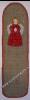

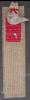

These cheerful and colourful bookmarks are handmade in the patchwork technique.
About varicoloured pieces of fabric
.jpg) The Domostroy monument of the Russian literature that was compiled by Sylvester, an Archpriest of the Annunciation Cathedral in the Moscow Kremlin and a famous 16th-century public figure, is a valuable source of information on the customs, regulations and life styles of his period.
The Domostroy monument of the Russian literature that was compiled by Sylvester, an Archpriest of the Annunciation Cathedral in the Moscow Kremlin and a famous 16th-century public figure, is a valuable source of information on the customs, regulations and life styles of his period.
In Domostroy there are several chapters-instructions to wives good at needlework:
34. About wives skilled at needlework, about their thriftiness and how to cut clothes and keep leftovers and shreds;
35. How to cut clothes and keep leftovers and shreds;
37. How a mistress should daily keep an eye on servants doing homework and needlework and how she herself should keep her possessions and multiply them.
“As for best shirts and trousers for men and women, all these should be cut by herself or in her own presence, so that all the leftovers and shreds of coloured silk or taffeta, expensive and cheap, in gold thread and silk, as well as down, white and dyed linen, edgings and unstitched pieces of fabric, whether new or shabby, should be tucked away: small items should be packed in small bags, and the leftovers should be rolled and tied together, with everything sorted out by size and stored away. Now if she wants to sew something from old fabric or new, a good and thoughtful housewife has the needful at home and does not have, thank God, to search for it in the market”.
This shows how long ago materials for patchwork were taught to be stored and made use of. Clever housewives would decorate their clothes with patchwork and even make colourful patchwork quilts. Bright varicoloured patchwork articles adorned modest homes of peasants. Today pieced needlework has become a fascinating pastime that has conquered the world to become a decorative art in its own right.
About varicoloured pieces of fabric
.jpg) The Domostroy monument of the Russian literature that was compiled by Sylvester, an Archpriest of the Annunciation Cathedral in the Moscow Kremlin and a famous 16th-century public figure, is a valuable source of information on the customs, regulations and life styles of his period.
The Domostroy monument of the Russian literature that was compiled by Sylvester, an Archpriest of the Annunciation Cathedral in the Moscow Kremlin and a famous 16th-century public figure, is a valuable source of information on the customs, regulations and life styles of his period. In Domostroy there are several chapters-instructions to wives good at needlework:
34. About wives skilled at needlework, about their thriftiness and how to cut clothes and keep leftovers and shreds;
35. How to cut clothes and keep leftovers and shreds;
37. How a mistress should daily keep an eye on servants doing homework and needlework and how she herself should keep her possessions and multiply them.
“As for best shirts and trousers for men and women, all these should be cut by herself or in her own presence, so that all the leftovers and shreds of coloured silk or taffeta, expensive and cheap, in gold thread and silk, as well as down, white and dyed linen, edgings and unstitched pieces of fabric, whether new or shabby, should be tucked away: small items should be packed in small bags, and the leftovers should be rolled and tied together, with everything sorted out by size and stored away. Now if she wants to sew something from old fabric or new, a good and thoughtful housewife has the needful at home and does not have, thank God, to search for it in the market”.
This shows how long ago materials for patchwork were taught to be stored and made use of. Clever housewives would decorate their clothes with patchwork and even make colourful patchwork quilts. Bright varicoloured patchwork articles adorned modest homes of peasants. Today pieced needlework has become a fascinating pastime that has conquered the world to become a decorative art in its own right.
